

Hybrid Training
It’s common for hybrid athletes to struggle balancing strength and endurance training across four days of weekly training. A frequent thought is that more training is always better, but that isn’t necessarily true. The best type of training is one that you can stick to consistently, structure to meet your fitness level, goals, and training availability, and improve both your strength and endurance simultaneously.
A well-designed 4-day hybrid workout split gives you enough volume throughout the week to build strength and muscle, while also running, hiking, cycling, or doing other cardiovascular training regularly. This can all be achieved while managing your training volume and leaving room to recover.
By the end of this blog, you’ll be able to understand and apply:
Ready to start following a structured 4-day hybrid workout split? Join our hybrid training program, Sustainably Fit.

Hybrid training is where you are simultaneously aiming to improve in more than one type of fitness. This could combine two types of activities such as strength training and running, strength training and cycling, or really any combination of strength and endurance training. More commonly now, you hear hybrid training described as strength and endurance training to prepare for running events, triathlons, ironmans, or other races like Hyrox.
The best part about hybrid training is that anyone can participate and everyone can benefit from combining strength and endurance training. Gaining muscle, building strength, maintaining and increasing bone density, and improving brain health are just a few key health benefits of participating in strength training weekly. Enhancing endurance and improving heart health are the two main benefits of practicing regimented cardiovascular training. Between these two types of training, your overall health and longevity can significantly improve for the long term.
Hybrid training is not just for advanced or elite athletes; hybrid training is for everyone of all ages and fitness levels.
Avoid these common hybrid training mistakes.
A 4-day hybrid workout split is a solid option for those who are juggling a family, career, social life, and other obligations outside of fitness. Committing to four days of training per week provides the foundation and volume of strength and endurance training to achieve event- or race-specific goals. It also allows for the flexibility in scheduling, as well as sets the intention for those training for health and longevity.
A 4-day workout split gives you enough training volume throughout the week to manage your training load and prioritize recovery. By having three rest days per week, you have the flexibility to shift your schedule around to suit your needs. For example, if you typically workout Monday through Thursday, but something comes up on Tuesday, you have the flexibility to shift your training schedule by a day, stack a strength and endurance workout on the same day or back-to-back, or move a workout to over the weekend. Training four out of seven days per week gives you the flexibility you need to stay accountable and keep it sustainable.
By having 1-2 strength workouts and 2-3 endurance workouts within your 4-day hybrid workout split, you will set yourself up with the weekly structure to perform well, feel good, and recover efficiently. You’ll be able to lift heavy and complete quality cardiovascular sessions weekly.
If a 2-, 3-, 5-, or 6-day workout split is more appropriate for your current season in life, read our blog on how to structure your hybrid training workout split. Or read our specific 5-Day Hybrid Workout Split blog.
The intention behind your workouts matter. You want to be methodical in how you order your exercises, how you manage your training volume, and how you approach recovery. This is important if you want to adapt and respond well to your training, consistently lift heavy and run injury-free, and recover properly in between sessions.
When you start your workout, you want to warm-up to get the blood flowing and soft tissues prepared. Aim to include 1-3 general movements that address the spine, hips, knees, ankles, and rotation, as well as 1-2 specific movements that prep you for the day's specific workout demands. Once you’ve mobilized your body with some dynamic stretching, increase the blood flow with 3-7 minutes of cardio of choice (running, incline walking, row erg, ski erg, etc.). If you don’t have access to a cardio machine or the outdoors, skip this part of the warm-up. All together, your warm-up should take 4-8 minutes.
Read The Best Lifting Warm Up blog.
Watch my YouTube video for a Quick Run Warm Up.
Follow up your warm-up with 1-2 plyometric exercises to work on power and speed development, injury prevention, and coordination. Plyometric exercises are performed at the beginning of the workout because they require the most from your central nervous system (CNS). You want to include plyometric and power exercises in your program year-round, but you may see a higher volume of them when you enter your in-season.
The bulk of your workout begins after the warm up and plyometrics. Choose 1-2 compound exercises (multi-joint exercises), followed by 1-3 supporting or accessory exercises, and finish it out with 1-2 isolation exercises. You want to start your workout with compound exercises, such as squats, deadlifts, or bench press, because they involve multiple joints and multiple large muscle groups. The more joints and muscle groups involved, the more stress it puts on your body. As you go through the workout and develop more muscular fatigue, you’ll end the workout with isolation exercises, such as calf raises or bicep curls, since they require the least amount from your CNS.
If you have time, complete a cool down by stretching out the muscles you used during the workout by holding a static stretch for ~30 seconds each. The cool down is the least important part of the workout, so if you must skip something due to time constraints, opt out of the cool down.

During your sports’ in-season, you will want to decrease your strength training volume and frequency while likely maintaining or increasing intensity and increase your endurance training volume and frequency. This follows the typical hybrid training cycle of having seasons of higher training volume and lower training volume, respectively, to encourage consistent year-round training adaptations without burnout or injury.
Aim to complete 1-2 full body strength training sessions per week during the in-season to maintain your strength through the peak. As a general rule of thumb, when you are strength training four or less times per week and/or are in your in-season, full body workouts are recommended so you can train all of the important muscle groups throughout the week. This will also allow you to have enough time in between strength sessions to recover.
Day 1: Full Body Strength
Day 2: Interval Cardio (i.e., speed work, hill sprints, strides, etc.)
Day 3: Easy, Short Cardio + (Optional) Full Body Strength
Day 4: Moderate, Long Cardio
Depending on your goals, fitness level, and training availability, it could be helpful to add or swap in a conditioning workout to prepare you even further for your race, event, or activities.
Typically in the off-season, you will want to prioritize building muscle and gaining strength. If you opted for one strength training session during your in-season, consider increasing your strength training frequency to at least two sessions per week. You will also want to slightly lower your cardiovascular training volume and/or frequency. Again, this follows the typical hybrid training cycle that hybrid athletes follow throughout the year. One important note is to continue training aerobic speed and capacity to some degree through the off-season. Otherwise, if you only do easy runs or cardio, you may see a decrease in speed by the time you switch gears in the in-season.
Day 1: Full Body Strength
Day 2: Interval Cardio (i.e., speed work, hill sprints, strides, etc.)
Day 3: Full Body Strength
Day 4: Easy-Moderate, Long OR Short Cardio
Other considerations, depending on your fitness level and goals, could be scheduling a conditioning workout in place of a strength workout or on top of an already existing cardiovascular training session. This is why working with a hybrid training coach is beneficial for guiding you to the ideal workout split built for you.
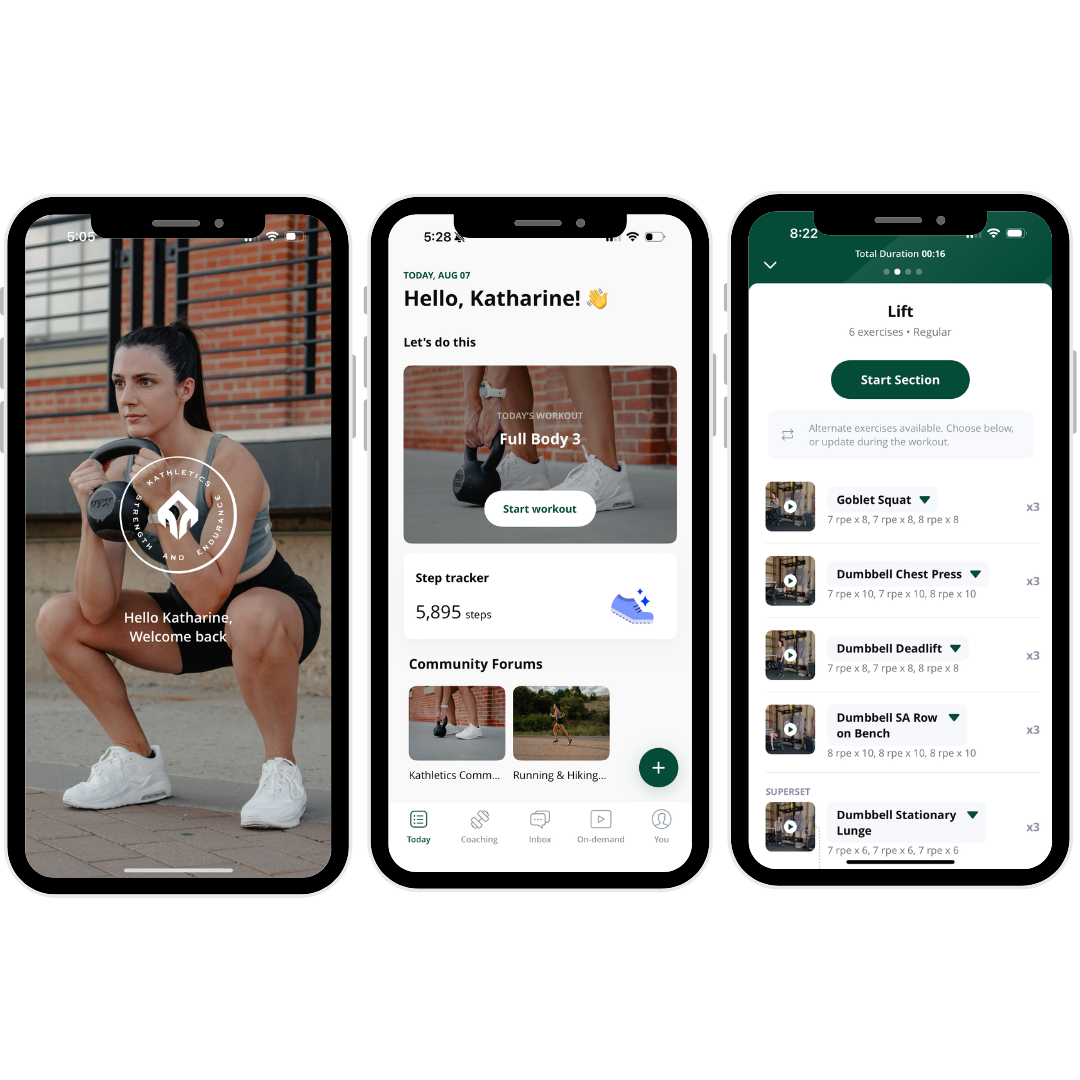
Managing your weekly strength and endurance workout plan isn’t easy, but it is manageable when you follow a program that provides structure and intention. When you go into your training cycle with a clear and concise program, you are one step closer to achieving your goals.
A 4-day hybrid workout routine is right for you if:
- You are a runner who wants to feel stronger on and off the trails and pavement.
- You are an outdoor enthusiast who is preparing for a type-2 fun adventure. Learn more about training for a 14er.
- You are a lifter who wants to add in cardio for heart health.
- You are a busy professional who wants to build their strength and endurance.
- You are a parent who wants to be strong and fit for themselves and their family.
- You want to feel stronger, move better, and live longer.
- You have the training availability for four days of workouts.
A 4-day hybrid workout routine may not be best for you if:
- You are new to fitness or a beginner to both strength and endurance.
- You don’t have four days per week to train consistently. (Consider starting with 3 days first!)
A sustainable hybrid training program isn’t about doing as much as possible, or even doing a specific number of workouts per week. It’s about finding a strength and endurance routine that you can do consistently. A 4-day hybrid workout split is for you if you want to improve your strength and endurance simultaneously, while also supporting your training with proper recovery, nutrition, sleep, and stress management.
If you’re tired of piecing together Instagram workouts and getting injured from AI running programs, our hybrid training programs are just what you need. At Kathletics, we meet you where you’re at in your fitness to develop a hybrid training program that works for you, your goals, your fitness level, and your training availability. Whether you’re training for your first 10K or your next mountain adventure, we can help you train smarter and stay consistent. Check out our training options to find your perfect fit.

Katharine Moustakes is the founder, personal trainer, and running coach of Kathletics. She coaches runners, hikers, and outdoor enthusiasts to build strength and endurance that can be sustained all year long. Through the Kathletics blog, she shares practical advice to help athletes train smarter, stay consistent, and achieve their goals.
Get strength and endurance tips, running recs, and all the Kathletics updates right to your inbox.
