

Hybrid Training
It’s common for athletes to struggle balancing strength and endurance training without feeling exhausted, sore, and underrecovered. The truth is, hybrid training doesn’t mean that doing more is better. It means that you need to structure your training in a way where you can improve both your strength and endurance simultaneously.
A well-designed 5-day hybrid workout split gives you enough volume throughout the week to build strength and muscle, while also running, hiking, cycling, or doing other cardiovascular training regularly. This can all be done while managing your training volume and leaving room to recover.
By the end of this blog, you’ll be able to understand and apply:
- What hybrid training is
- Why a 5-day hybrid workout split works
- How to structure your training
- Sample 5-day hybrid workout split
Ready to start following a structured 5-day hybrid workout split? Join our hybrid training program, Sustainably Fit.

Hybrid training is the approach to fitness where you are simultaneously aiming to improve in more than one discipline. This could combine two types of activities such as strength training and running, strength training and cycling, or really any combination of strength and endurance training. Most frequently now, you hear hybrid training described as strength and endurance training to prepare for running events, triathlons, ironmans, or Hyrox events.
The best part about hybrid training is that anyone can benefit from combining strength and endurance training. Gaining muscle, building strength, maintaining and increasing bone density, and improving mood, energy, and brain health are just a few key health benefits of participating in regular strength training. Enhancing endurance and improving cardiovascular health are two major benefits of doing regular regimented endurance training. Between these two types of training, your health and longevity can significantly improve for the long term.
The best part about hybrid training is that it’s not just for advanced or elite athletes. Hybrid training is for everyone of all ages and fitness levels.
Avoid these common hybrid training mistakes.
A 5-day hybrid workout split is a solid option for those who are juggling a family, career, social life, and other obligations outside of fitness. Committing to five days of training per week provides the necessary variety and volume of strength and endurance training to achieve event- or race-specific goals. It also allows for the proper structure and intention for those training for health and longevity.
A 5-day workout split gives you enough training volume throughout the week to manage your training load and prioritize recovery. By having two rest days per week, you have the flexibility to shift your schedule around to suit your needs. For example, if you typically workout Monday through Friday but something comes up on Wednesday, you have the flexibility to shift your workout schedule by a day, stack a strength and endurance workout on the same day or back-to-back, or, worst case scenario, skip a workout that week because you will still have completed four training sessions. Training five out of seven days per week gives you the flexibility you need to stay accountable and keep it sustainable.
By having 2-3 dedicated strength workouts and 2-3 dedicated endurance workouts within your 5-day hybrid workout split, you have the weekly structure to perform well. You’ll have enough time to recover in between workouts to lift heavy weight and complete quality endurance sessions.
If a 2-, 3-, 4-, or 6-day workout split is more appropriate for your current season in life, read our blog on how to structure your hybrid training workout split.

Your workout structure matters more than you think. You want to be strategic in how you order your exercises to manage volume, load, and fatigue. This is important if you want to adapt well to your training, consistently lift heavy, and smoothly recover in between sessions.
When you start your workout, you want to warm-up to get the blood flowing and soft tissues prepared. Aim to include 2-4 movements that address the spine, hips, knees, ankles, and rotation. Once you’ve mobilized your body with some dynamic stretching, increase the blood flow with 3-7 minutes of cardio of choice (running, incline walking, row erg, ski erg, etc.). If you don’t have access to a cardio machine or the outdoors, skip this part of the warm-up. All together, your warm-up should take 4-8 minutes.
Read The Best Lifting Warm Up.
Watch for a Quick Run Warm Up.
Follow up your warm-up with 1-2 plyometric exercises to work on power and speed development, injury prevention, and coordination. Plyometric exercises are performed at the beginning of the workout because they require the most from your central nervous system (CNS).
The meat and potatoes of your workout starts here. Choose 1-2 compound exercises (multi-joint exercises), followed by 1-3 supporting or accessory exercises, and finish it out with 1-2 isolation exercises. You want to start your workout with compound exercises, such as squats, deadlifts, or bench press, because they involve the most joints and muscle groups. And the more muscle groups involved, the more stress it puts on your body. As you go through the workout and develop more muscular fatigue, you’ll end the workout with isolation exercises such as calf raises or bicep curls since they require the least amount from your CNS.
If you have time, complete a cool down by stretching out the muscles you used during the workout with a static hold for 20-30 seconds each. The cool down is the least important part of the workout, so if you must skip something due to time constraints, opt out of the cool down.
During your sports’ in-season, you will notice a decrease in strength training volume and frequency and an increase in endurance training volume and frequency. This follows the hybrid training cycle of having seasons of higher training volume and lower training volume, respectively, to encourage year-round training adaptations without burnout or injury.
Day 1: Full Body Strength
Day 2: Interval Cardio (i.e., speed work, hill sprints, speed training, etc.)
Day 3: Full Body Strength
Day 4: Easy, Short Cardio + (Optional) Full Body Strength
Day 5: Moderate, Long Cardio
Depending on your goals, fitness level, and training availability, it could be helpful to add in a conditioning workout to prepare you even further for your race, event, or activities.
Typically in the off-season, you will want to spend more time building muscle and gaining strength. If you opted for two strength training sessions during your in-season, consider increasing your strength training frequency and volume while slightly lowering your cardiovascular training volume and/or frequency.
Day 1: Full Body Strength
Day 2: Interval Cardio (i.e., speed work, hill sprints, speed training, etc.)
Day 3: Full Body Strength
Day 4: Full Body Strength
Day 5: Easy-Moderate, Long OR Short Cardio
Other considerations, depending on your fitness level and goals, could be scheduling a conditioning workout in place of a strength workout or on top of an already existing cardiovascular training session could be beneficial. This is why working with a hybrid training coach is helpful for guiding you to the ideal workout split built for you.
Managing your weekly strength and endurance workout plan isn’t easy, but it is manageable when you follow a program that's structured and intentional. When you go into your training cycle with a clear and concise program, you are one step closer to achieving your goals.
A 5-day hybrid workout routine is right for you if:
- You are a runner who wants to feel stronger and more powerful on and off the trails and pavement.
- You are a hiker who is preparing for a type-2 fun adventure. Learn more about training for a 14er.
- You are a lifter who wants to dabble in cardio.
- You are a busy professional and/or parent who wants to build their strength and endurance.
- You want to feel stronger, move better, and live longer.
- You have the training availability for five days of workouts.
A 5-day hybrid workout routine may not be best for you if:
- You are new to fitness or a beginner to both strength and endurance.
- You don’t have 5 days per week to train consistently. (Consider starting with 3 days first!)
A successful hybrid training program isn’t about doing as much as possible, or even doing a specific number of workouts per week. It’s about finding a rhythm of what you can do consistently in both strength and endurance training. A 5-day hybrid workout split is for you if you want to improve your strength and endurance simultaneously, while also supporting your training with proper recovery, nutrition, sleep, and stress management.
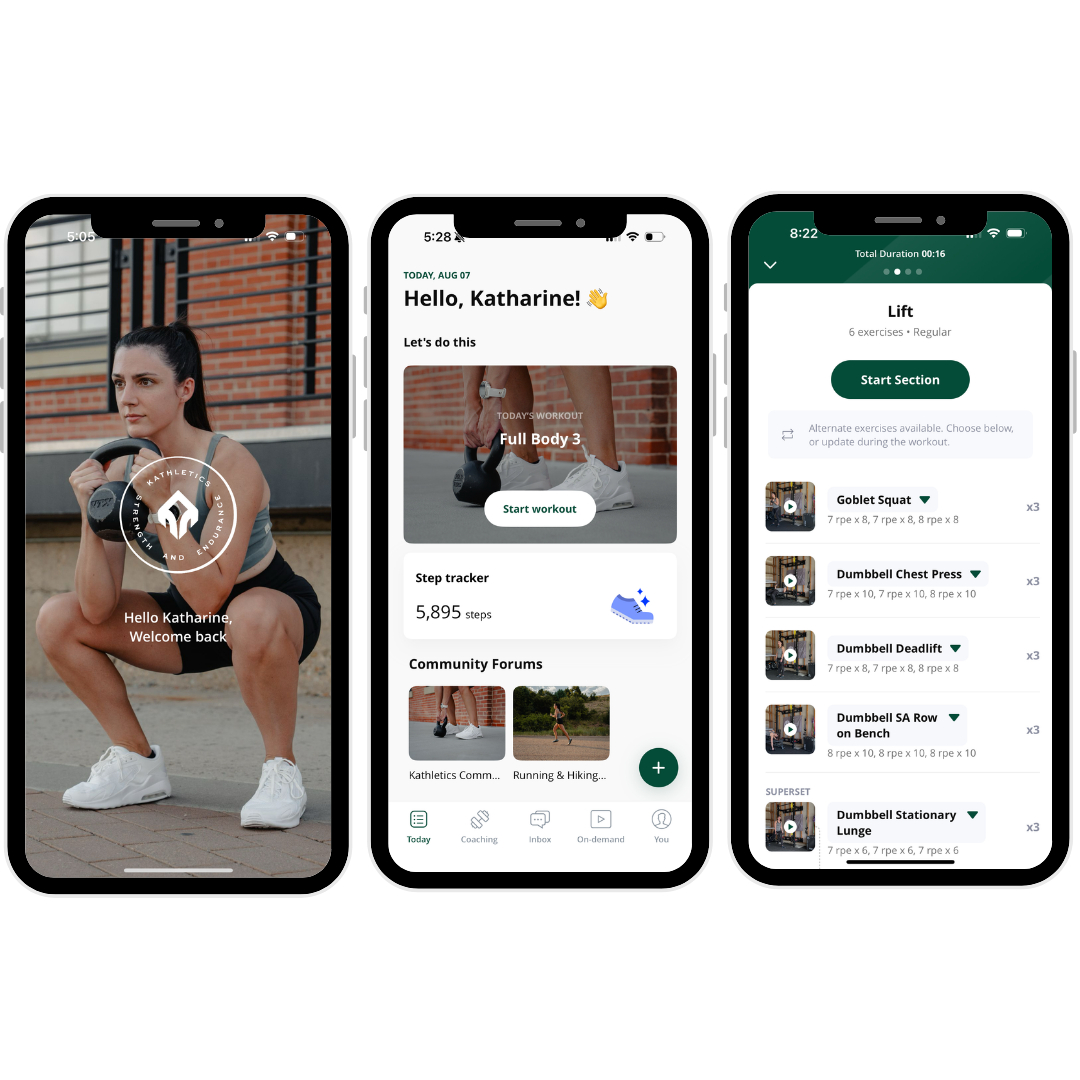
If you’re tired of piecing together Instagram workouts and AI running programs, our hybrid training programs are just what you need. At Kathletics, we meet you where you’re at in your fitness to develop a hybrid training program that works for you, your goals, your fitness level, and your training availability. Whether you’re training for your first 5K or your next mountain adventure, we can help you train smarter and stay consistent. Browse our training options to find your perfect fit.
.png)
Katharine Moustakes is the founder, personal trainer, and running coach of Kathletics. She coaches runners, hikers, and outdoor enthusiasts to build strength and endurance that can be sustained all year long. Through the Kathletics blog, she shares practical advice to help athletes train smarter, stay consistent, and achieve their goals.
Get strength and endurance tips, running recs, and all the Kathletics updates right to your inbox.
